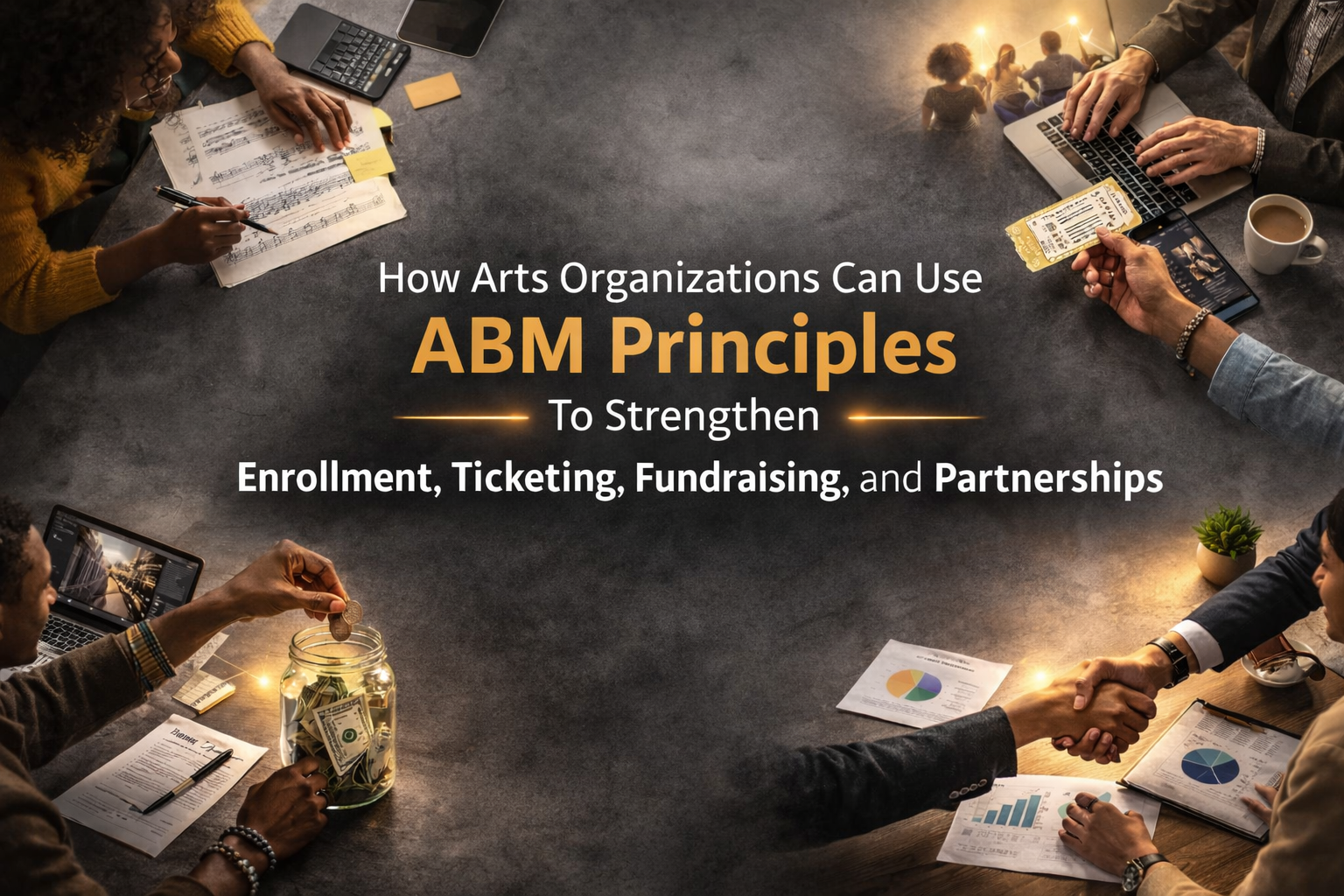
Account Based Marketing simply gives structure to what arts organizations already try to do intuitively.
Arts organizations are naturally relationship driven. Whether it is a music school guiding prospective families, a symphony stewarding donors, a theater cultivating season ticket holders, or a museum building corporate partnerships, everything depends on connection, clarity, and timing.
It focuses your resources on the audiences who matter most and builds journeys that feel personal rather than transactional.
And like any strong artistic production, every role contributes something essential. Marketing, development, admissions, artistic leadership, guest services, and community engagement each play their part. When unified through ABM, the entire organization moves with more intention and less guesswork.
📖 Related Blogs:
What is ABM, How Does it Work & What Makes it So Special?
7 Key Distinctions Between ABM (Account Based Marketing) and Demand Marketing
🏫 Enrollment Growth for Music Schools and Conservatories
Families enroll when communication feels personal and guided. ABM helps by identifying high-fit families and giving them a clearer, more supportive journey.
Successful programs use ABM principles to:
Segment families by interest, age group, program type, or audition path
Prioritize follow-up with the highest-fit inquiries
Deliver personalized omnichannel messaging that aligns admissions and marketing
Give continuing families retention-focused communication
Example:
A conservatory identifies high-intent families based on past attendance, form responses, and behavior. Those families receive curated content about auditions, faculty spotlights, campus culture, and next steps. Admissions follows up with tailored calls, not generic scripts. The journey feels intentional.
🎻 Patron Development for Symphonies and Orchestras
ABM strengthens the relationships that lead to repeat attendance, multi-ticket purchases, and long-term patron loyalty.
Successful orchestras use ABM to:
Identify patrons likely to return or upgrade
Create personalized communication that reflects musical interests
Build coordinated omnichannel campaigns around repertoire, artists, or themes
Nurture post-concert relationships with tailored content
Example:
A symphony analyzes which first-time attendees showed high engagement. Those patrons receive personalized follow-up with behind-the-scenes videos, conductor notes, and targeted offers. Over time, they get segmented into a pathway that encourages returning attendance and donor curiosity.
🎭 Donor Stewardship and Fundraising for Theaters, Dance Companies, and Museums
Fundraising is one of the most natural places for ABM.
Successful organizations use ABM to:
Score donors based on philanthropic history and engagement
Deliver personalized cultivation paths for major gift prospects
Use aligned messaging across development, marketing, and artistic leadership
Strengthen donor retention by celebrating impact and deepening connection
Example:
A theater identifies a small group of patrons who consistently attend storytelling-driven productions. Development creates a focused path that includes early previews, thank-you notes from artistic leadership, and targeted invitations. Donors feel seen, not solicited.
🧐 Related Education Report: Donor Retention Statistics
📈 Ticketing Growth for Performing Arts Organizations
For theaters, dance companies, and multidisciplinary arts centers, ABM supports repeat attendance and subscriber growth.
Successful organizations apply ABM by:
Tracking audience behavior to identify repeat potential
Delivering segmented messaging around genres, artists, or themes
Aligning marketing and box office to create shared visibility
Using post-show follow-ups to nurture future interest
Example:
A dance company sees strong engagement from attendees of contemporary works. That segment receives personalized messages about upcoming choreographers and behind-the-scenes rehearsal content. Ticketing and marketing work together to guide them toward multi-show packages.
🤝 Partnership and Community Engagement for Museums and Arts Centers
Partnerships thrive when organizations understand which community, corporate, and educational partners are the best strategic fit.
Successful organizations use ABM to:
Identify partners aligned with mission, audience, and reach
Build personalized outreach supported by aligned internal messaging
Maintain consistent communication across departments
Strengthen retention through ongoing value and shared goals
Example:
A museum identifies local healthcare and wellness partners who align with an upcoming exhibit theme. They receive personalized invitations, tailored sponsorship decks, and coordinated messaging across development, marketing, and education. The experience feels thoughtful and intentional.
🖇️ Internal Alignment
Most arts organizations don’t need more tactics.
They need alignment.
ABM helps teams:
Share the same audience definitions
Move prospects and patrons through a consistent journey
Coordinate messaging across marketing, development, admissions, and artistic leadership
Strengthen retention by understanding what matters most to each audience segment
When everyone knows their role, the organization becomes more efficient, more intentional, and more connected to the community it serves.
Written by Raycheal Proctor
If your organization is ready to apply ABM principles to enrollment, ticketing, donor development, and partnerships, schedule a consultation with UMM. We help arts organizations build focused, strategic systems that feel personal to the people who matter most.
Dare to Dream, and Achieve Brilliance